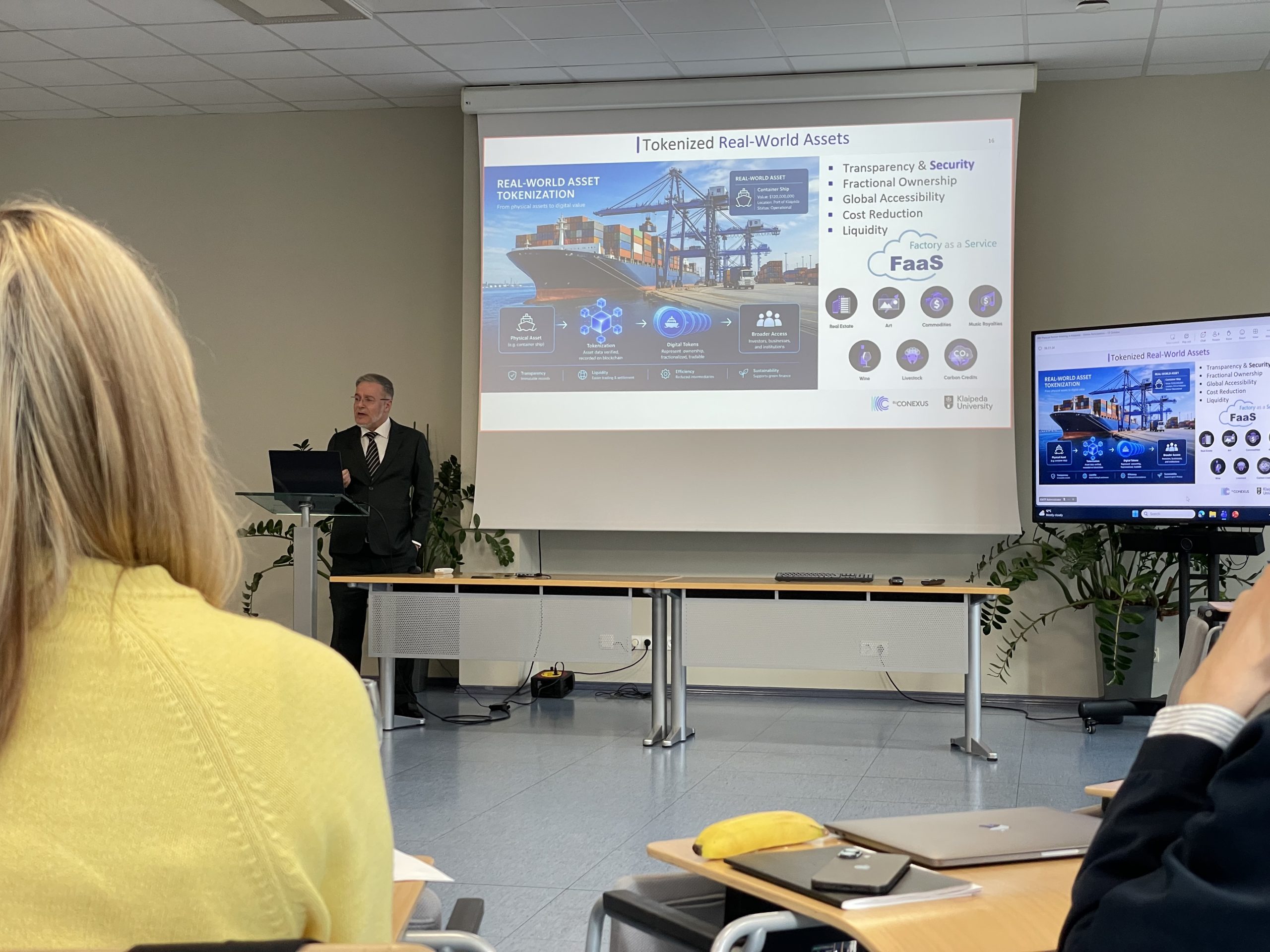
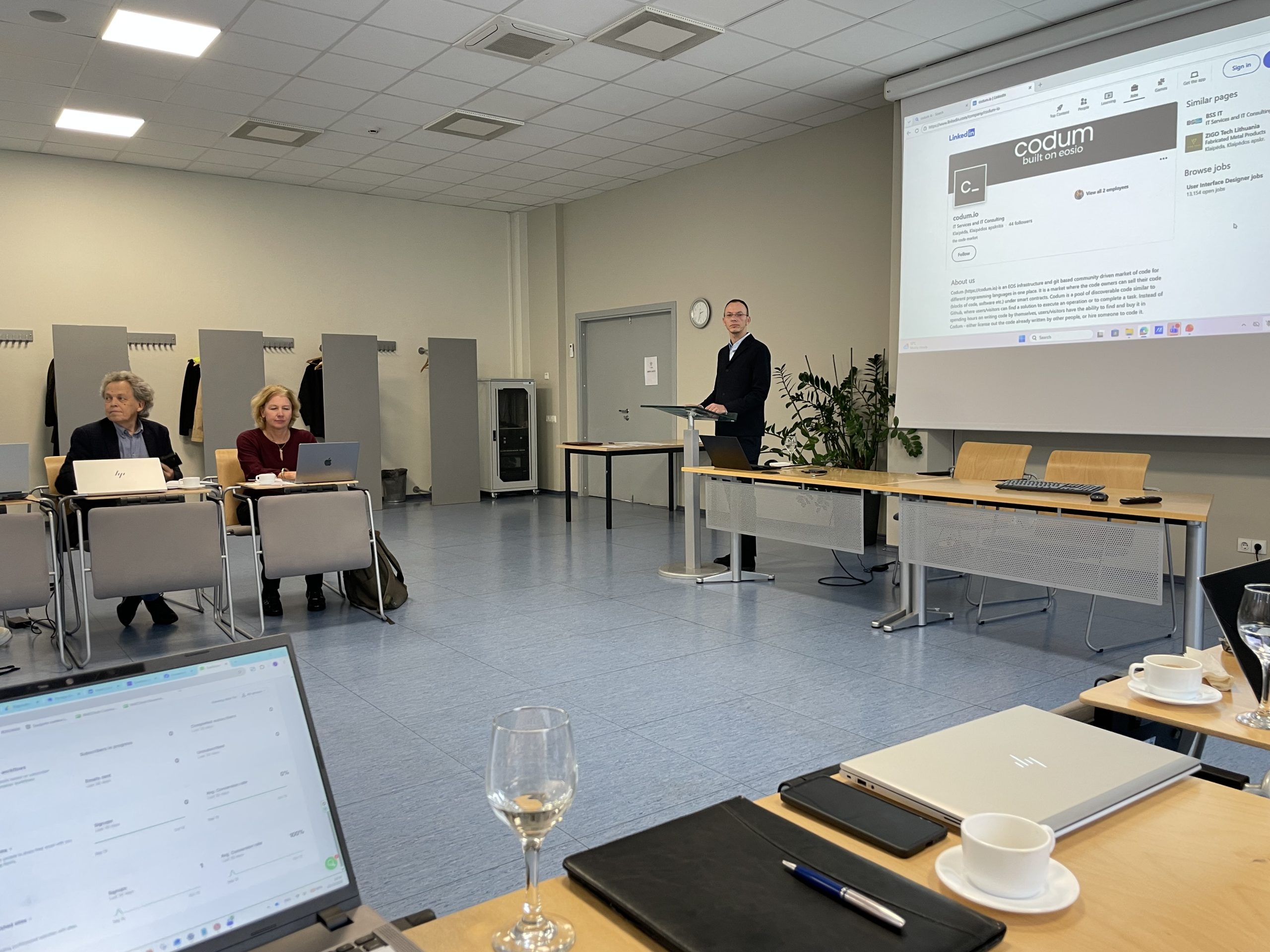
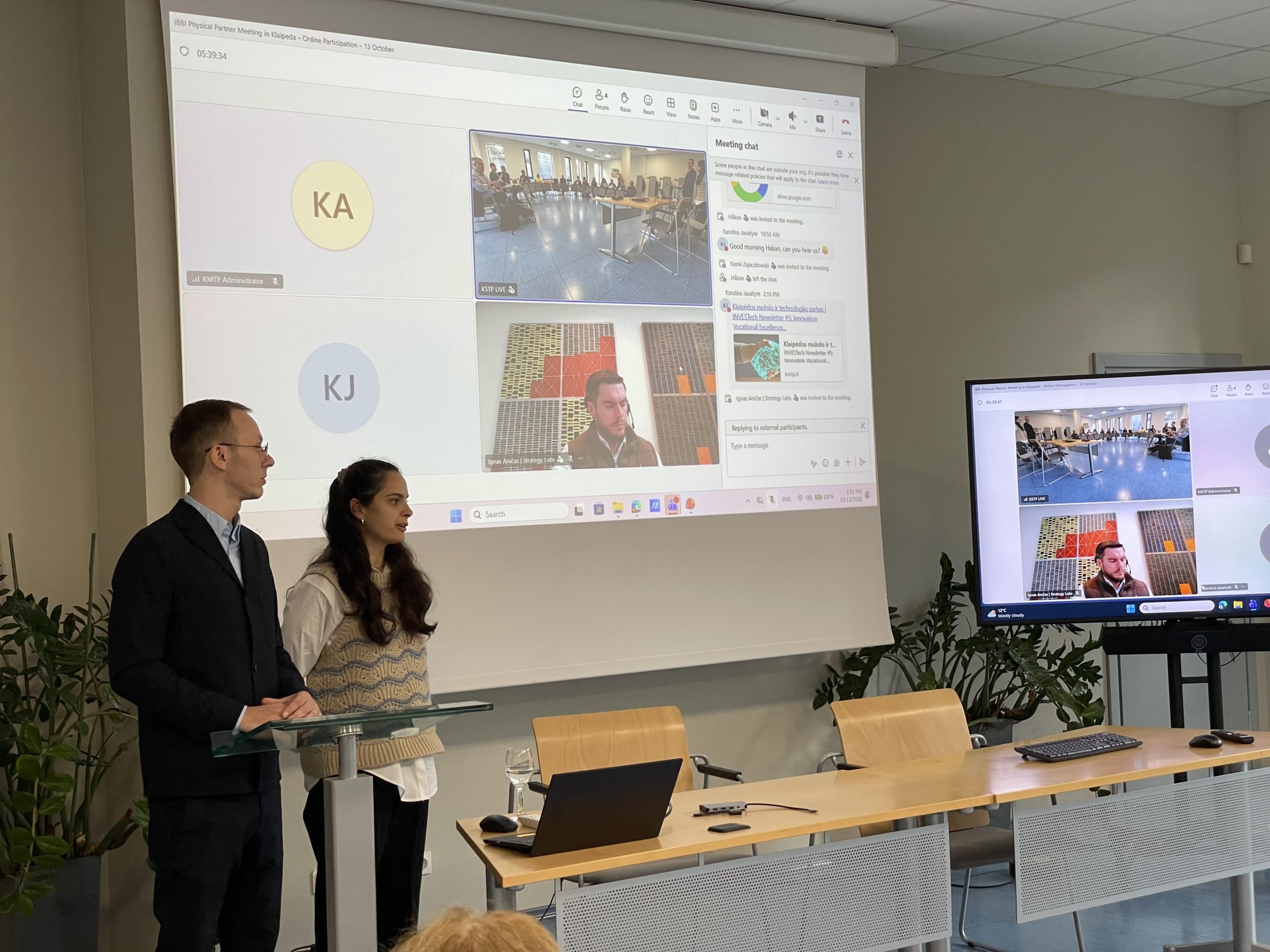
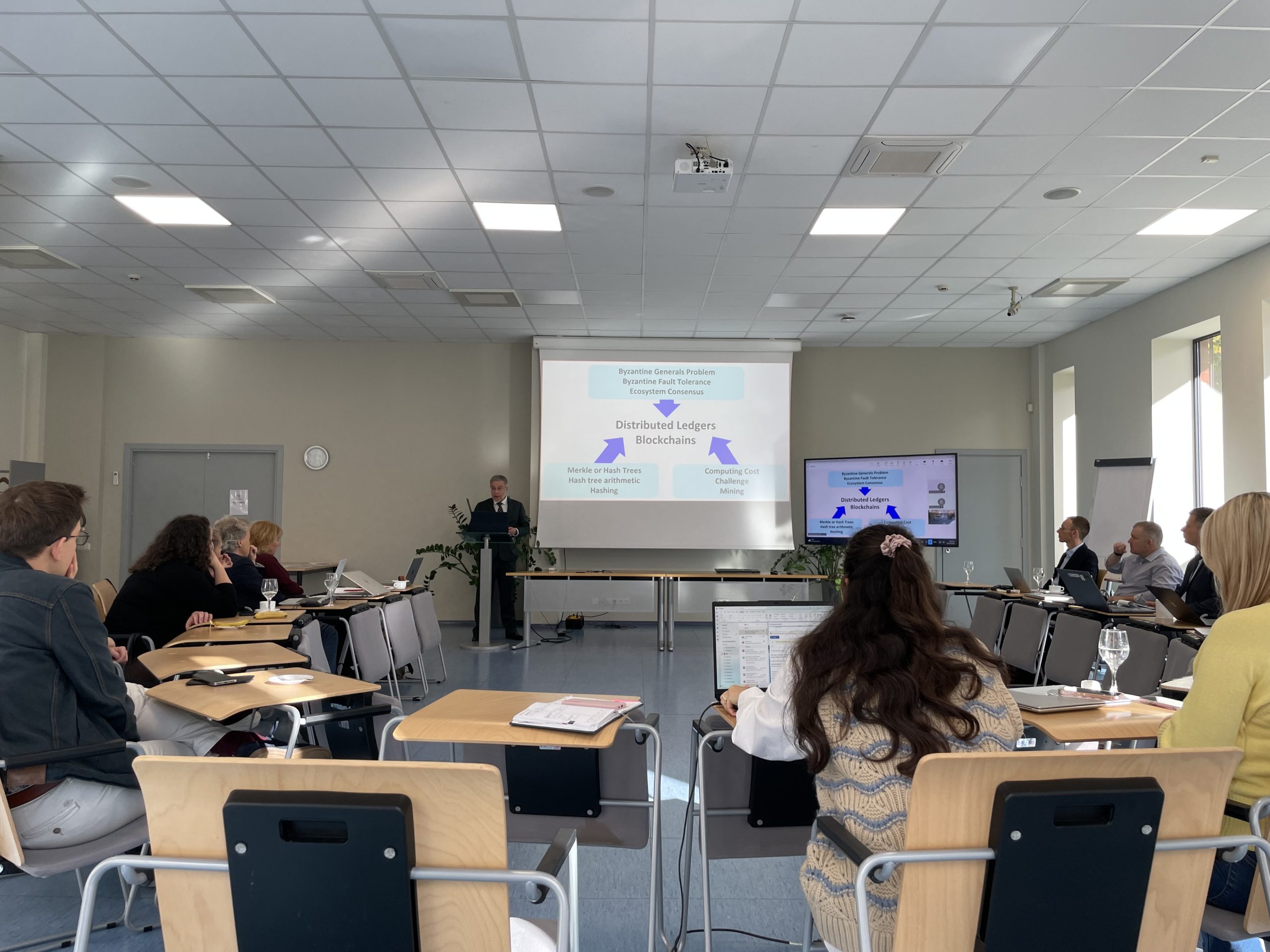
Does every business need blockchain technology? Not necessarily. However, understanding when distributed ledger technology (DLT) can provide real value is becoming increasingly relevant for companies looking for more secure data exchange, greater process transparency and more efficient supply chain management. On 13–14 October, Klaipeda Science and Technology Park hosted a partner meeting of the IBBI – Industrial Baltic Blockchain Initiative project. Partners from Lithuania, Sweden and Poland discussed project activities, upcoming training, advisory measures and practical scenarios for applying blockchain technologies. The project aims to help green and blue sector SMEs in the South Baltic region better understand the potential of these technologies and test their practical applications.
The discussions focused on concrete use cases, including product and material traceability, secure data exchange between organisations, supply chain management, process automation and the tokenisation of real-world assets. Participants also discussed the evolving EU regulatory environment and the question of when distributed ledger technology can offer a genuine advantage over conventional data management systems.
Local experts also shared their experience and insights during the meeting: Liucijus Urmonas (Regnum boni, codum.io), Ignas Aničas (Strategy Labs) and Giovanni Di Noto (Klaipeda University). The discussions helped project partners compare different technological and business perspectives and better understand what knowledge and practical tools companies need most.
The next stages of IBBI will include the development of a South Baltic industrial blockchain training centre and a cross-border cooperation network, as well as training, advisory and mentoring services and practical pilot cases. The aim is to help companies not only become familiar with the technology, but also assess where its application could contribute to more efficient and sustainable operations.
IBBI brings together partners from Sweden, Lithuania and Poland.

The project is co-financed by the Interreg South Baltic Programme 2021–2027 through the European Regional Development Fund.
The content of this publication is the sole responsibility of its author(s) and does not necessarily reflect the position of the European Union, the Managing Authority or the Joint Secretariat of the Interreg South Baltic Programme 2021–2027.