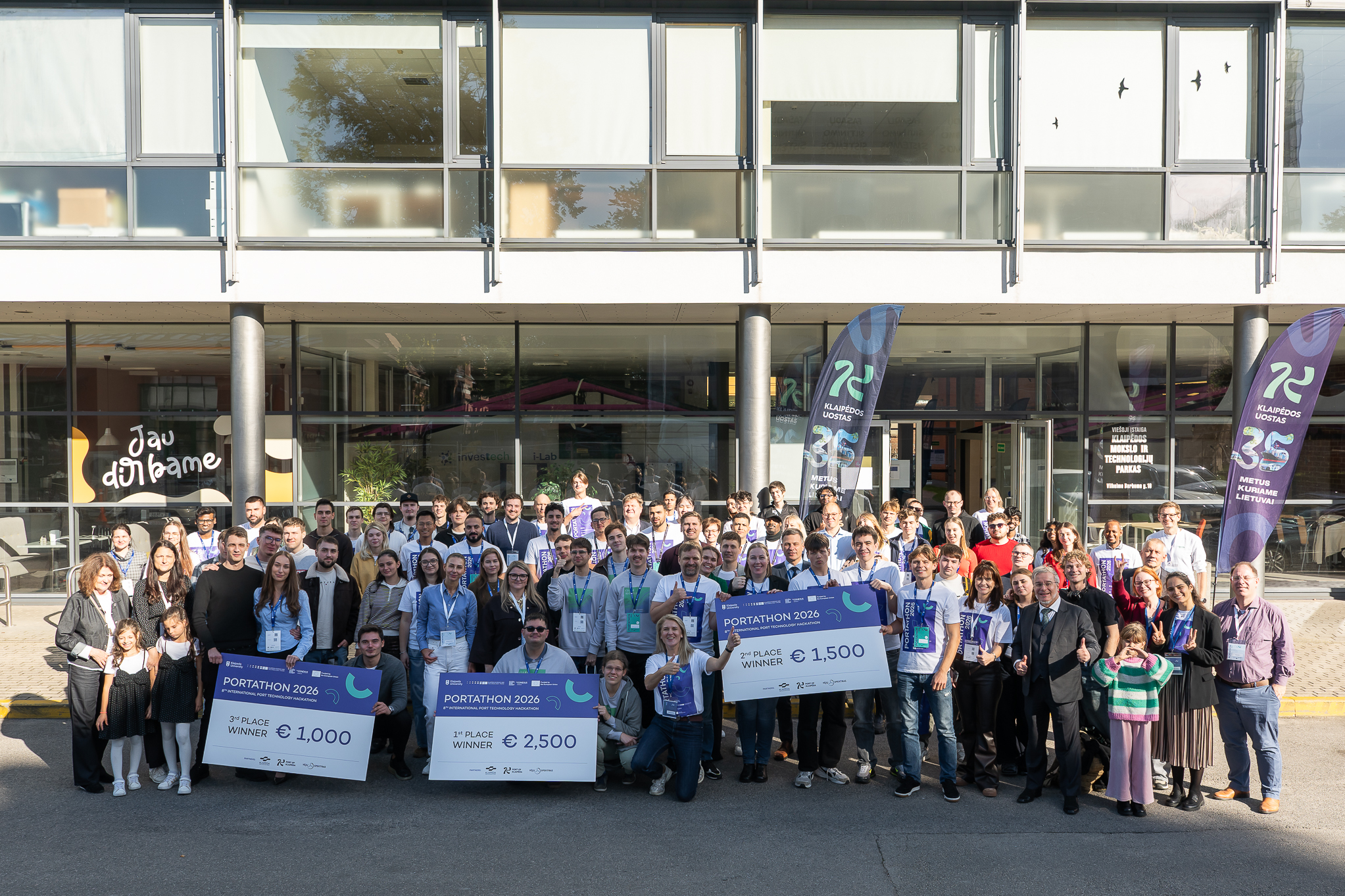
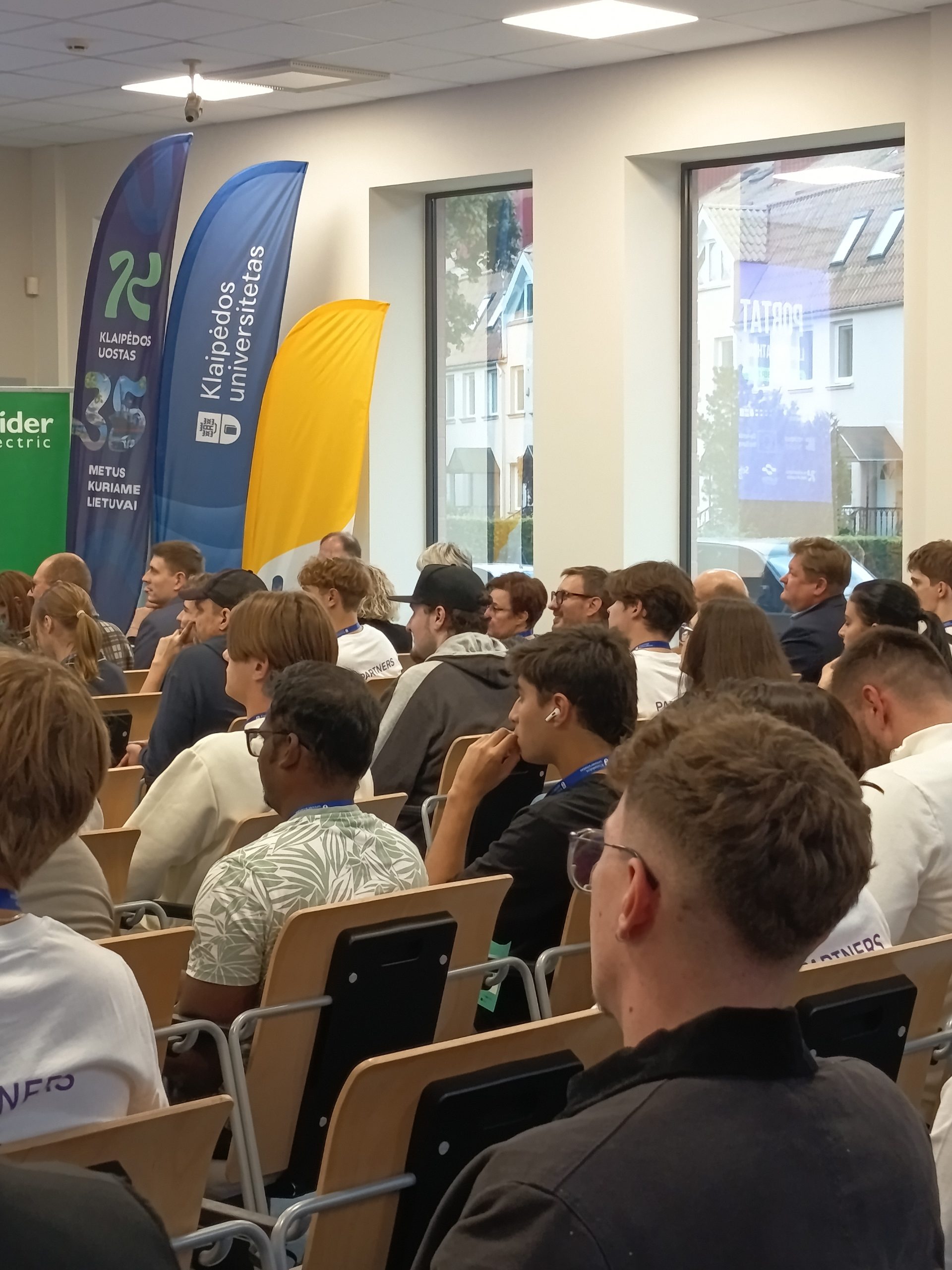
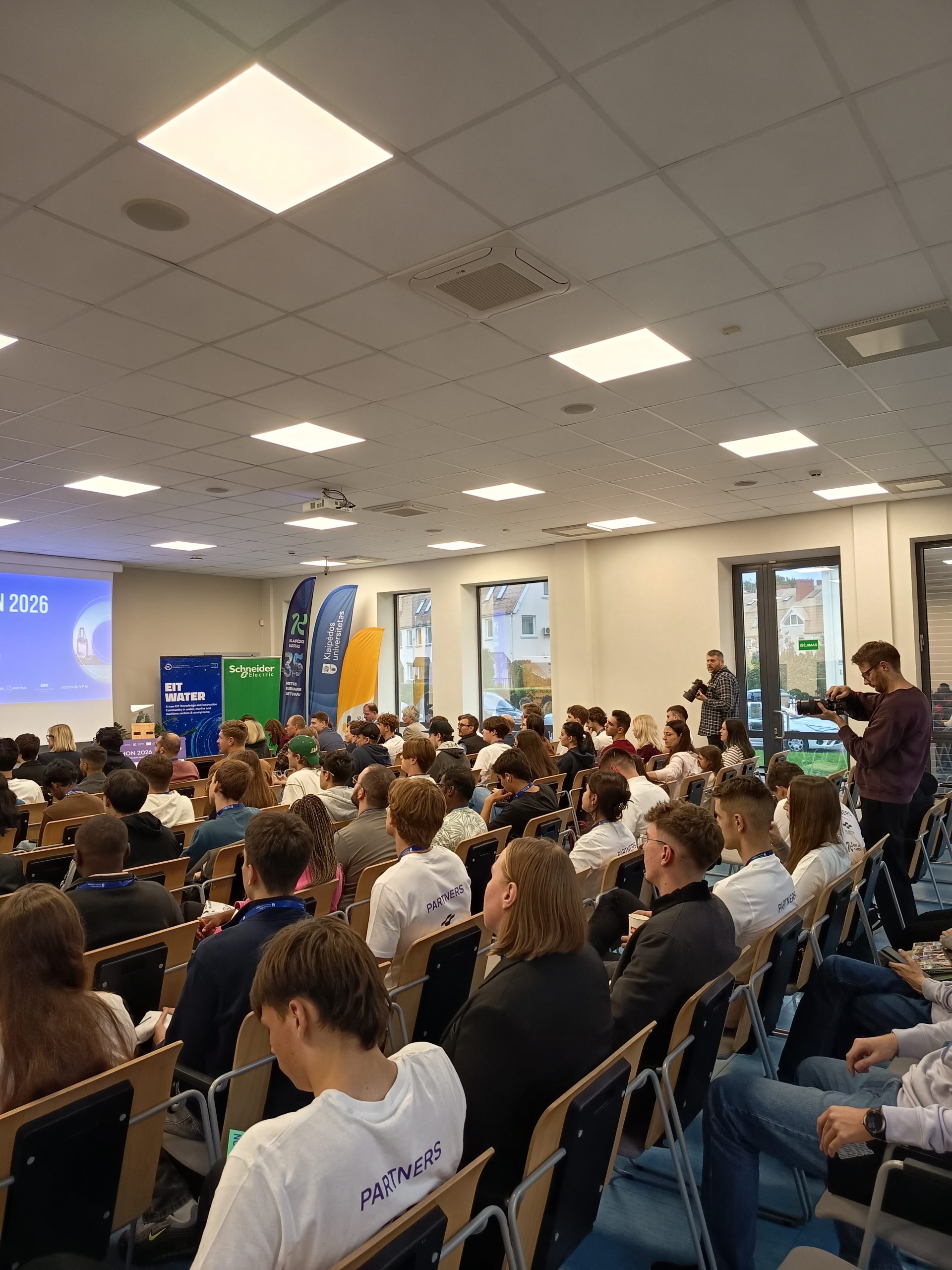
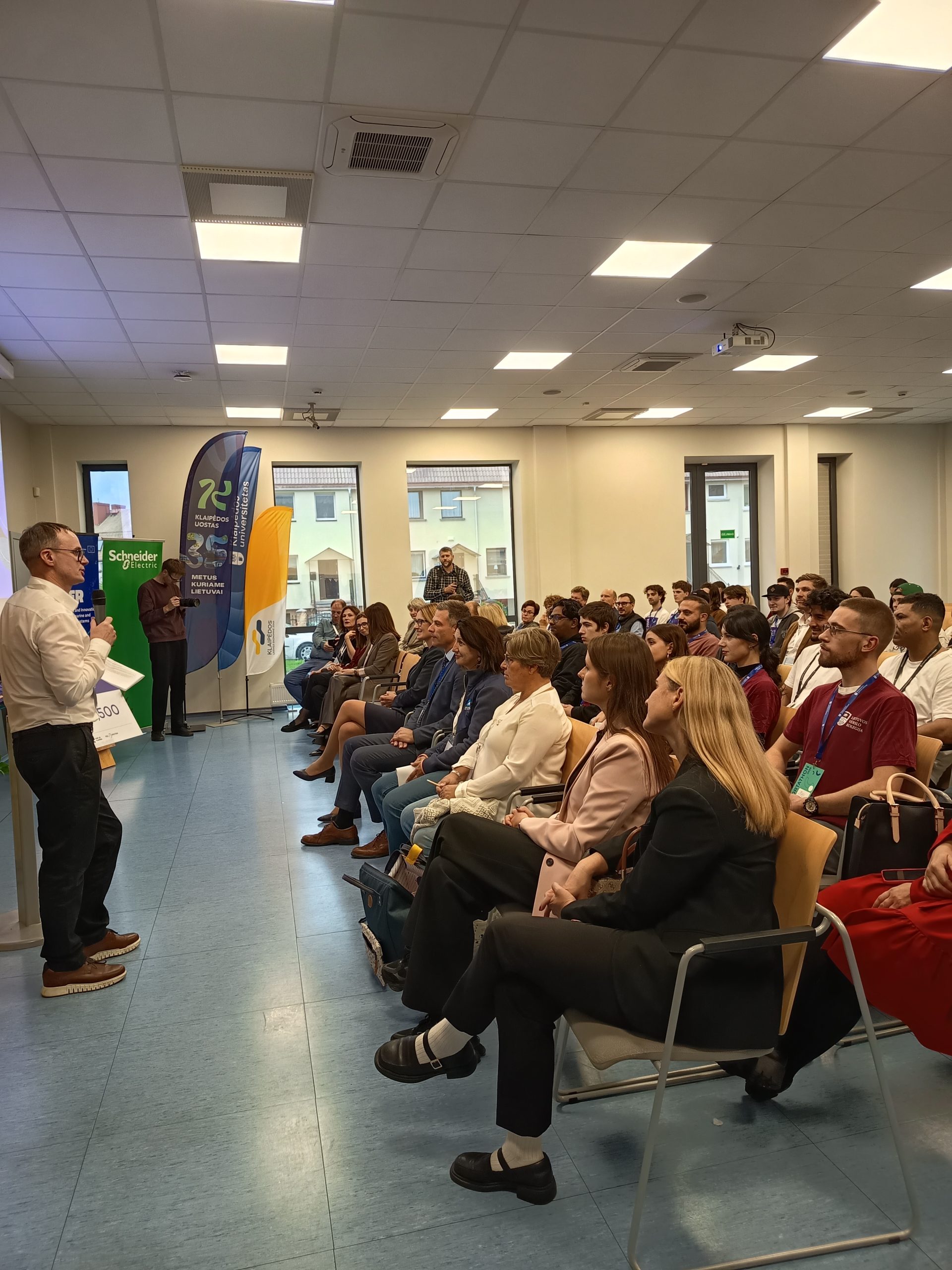
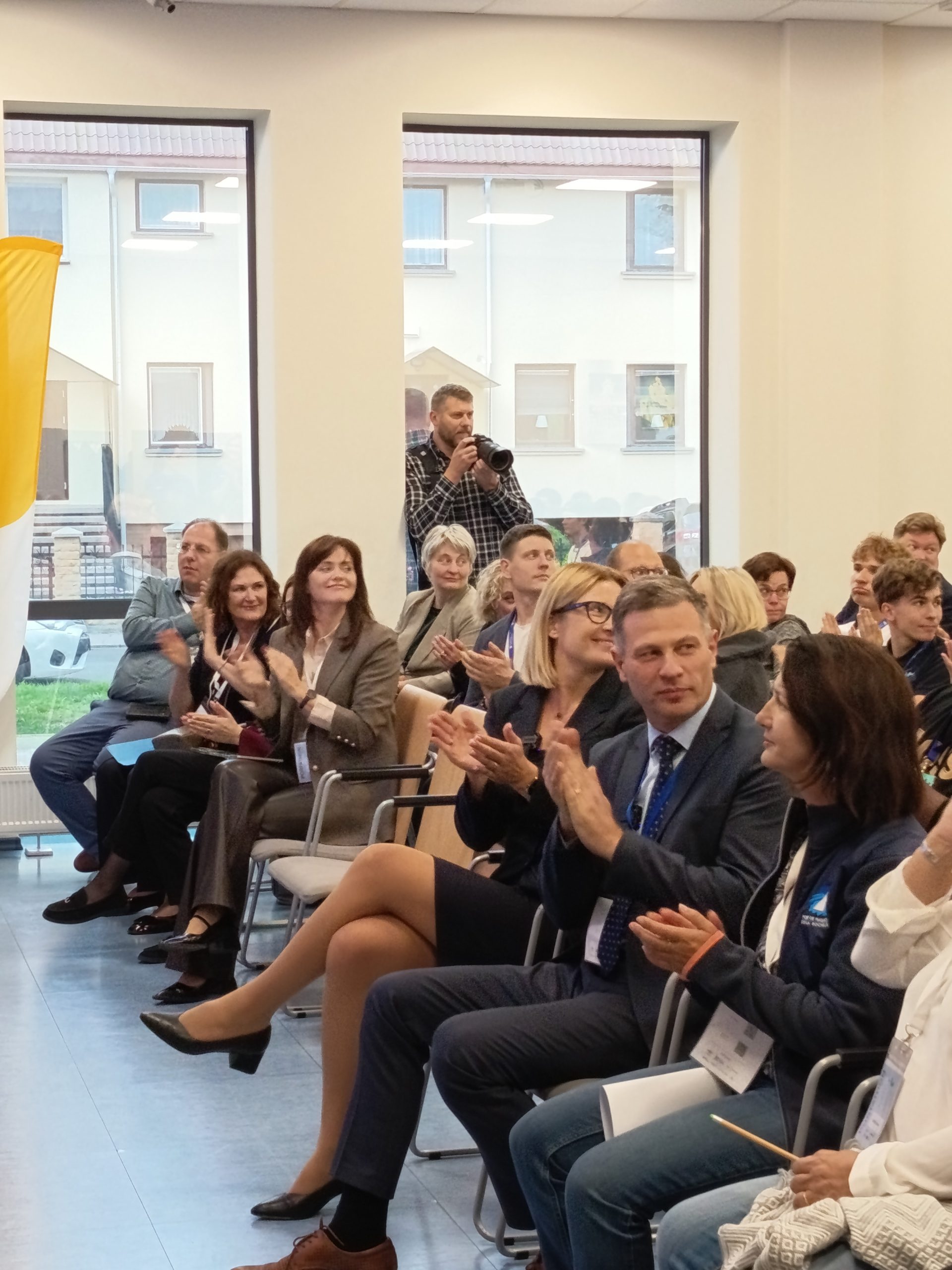
The international PORTATHON 2026 hackathon, organised by Klaipeda Science and Technology Park and Klaipeda University, concluded in Klaipeda on Sunday after bringing together participants from more than 10 countries. Over 48 hours, 120 participants working in 18 teams developed solutions to current challenges facing ports and industry. The top ideas focused on reducing the need for dredging at the Port of La Rochelle, improving incident management at Klaipėda Free Economic Zone and creating demand for green hydrogen at the Port of Klaipeda. The total prize fund amounted to EUR 5,000.
“I am proud to see talent, business, science and the innovation community coming together in Klaipeda. The annual international PORTATHON hackathon is a place where innovation takes shape as innovators meet challenge owners. Participants form teams, create, experiment and search for solutions with the potential to make a difference not only in Klaipeda, but across Lithuania.
“We feel strong support for the development of the startup environment from innovation policymakers and the Ministry of the Economy and Innovation. Following this hackathon, we are already planning even more intensive and valuable initiatives in biotechnology and dual-use technologies. I invite innovators and representatives of innovative companies to get in touch, as we can provide support ranging from idea development and finding technology partners to preparing for investment and market entry,” says Giedrius Janušauskas, Head of Development and Acting Director of Klaipeda Science and Technology Park.
First place went to Klaipeda University team KU.exe, which chose the BlueSediments challenge proposed by the Port of La Rochelle. The team’s solution combines a system designed to capture sediment entering the port basin with data collection that could enable more accurate forecasting of sediment accumulation in the future. Such a solution could help reduce the need for frequent and costly dredging – an issue also relevant to the Port of Klaipeda.
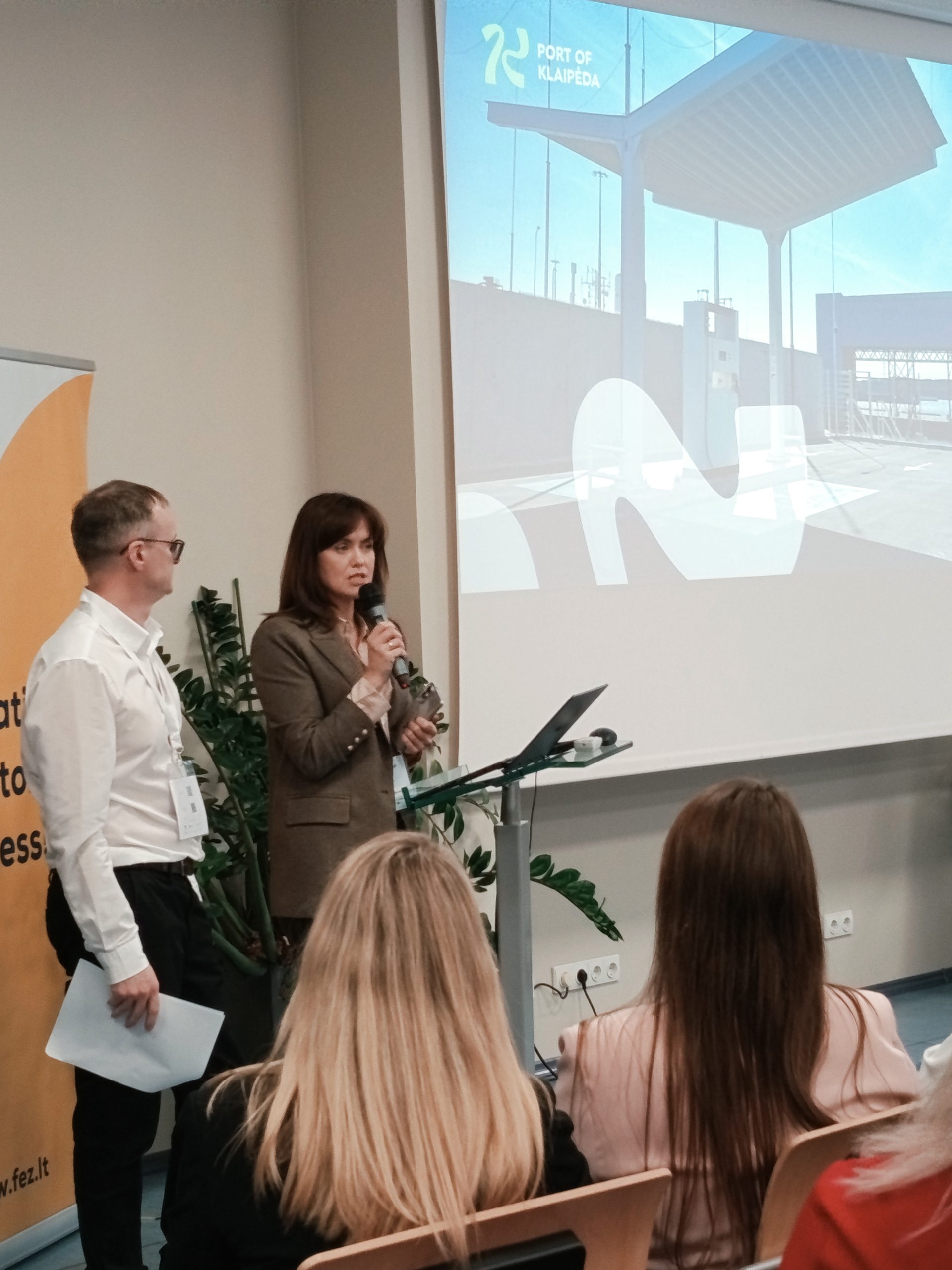
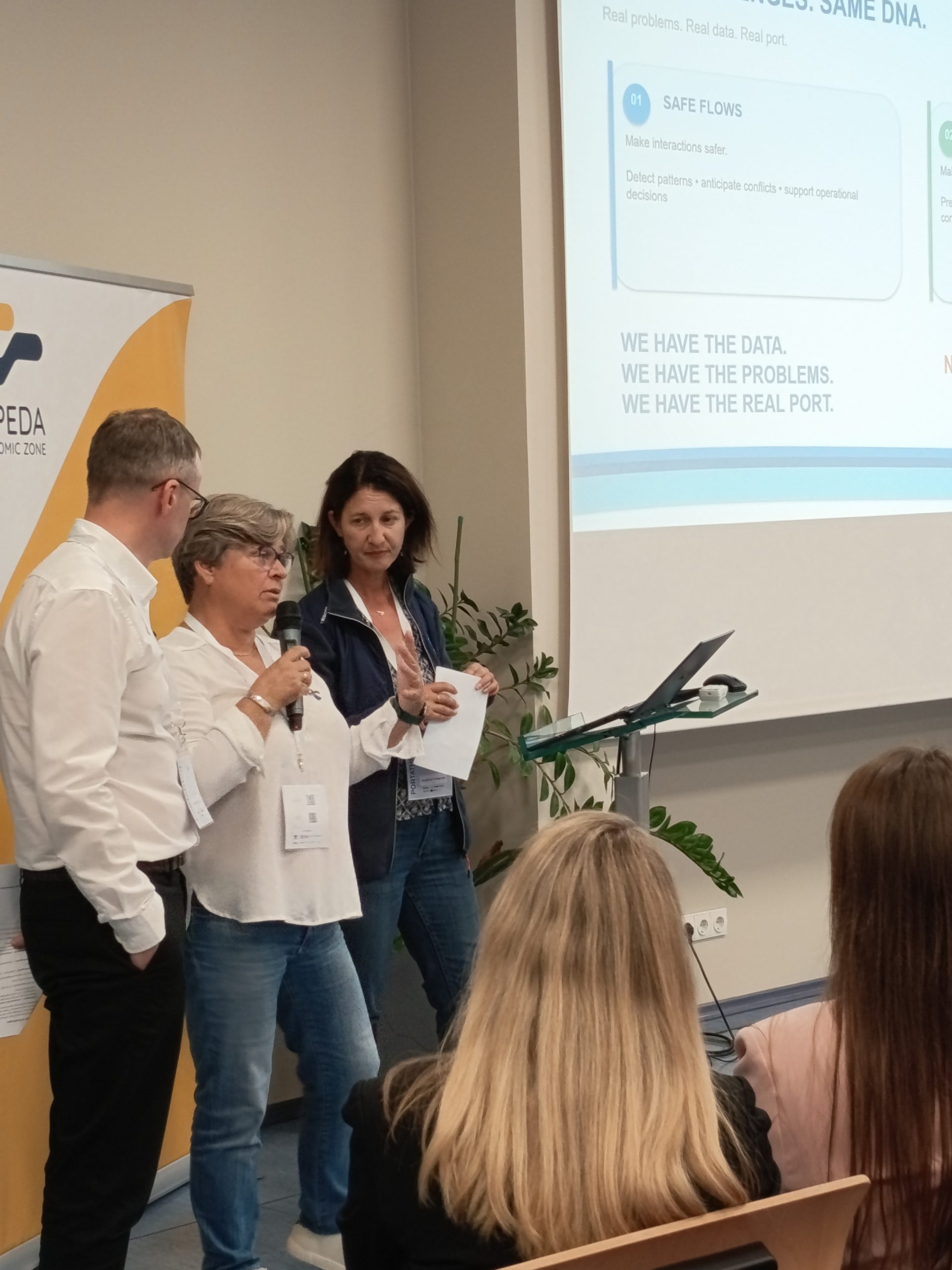
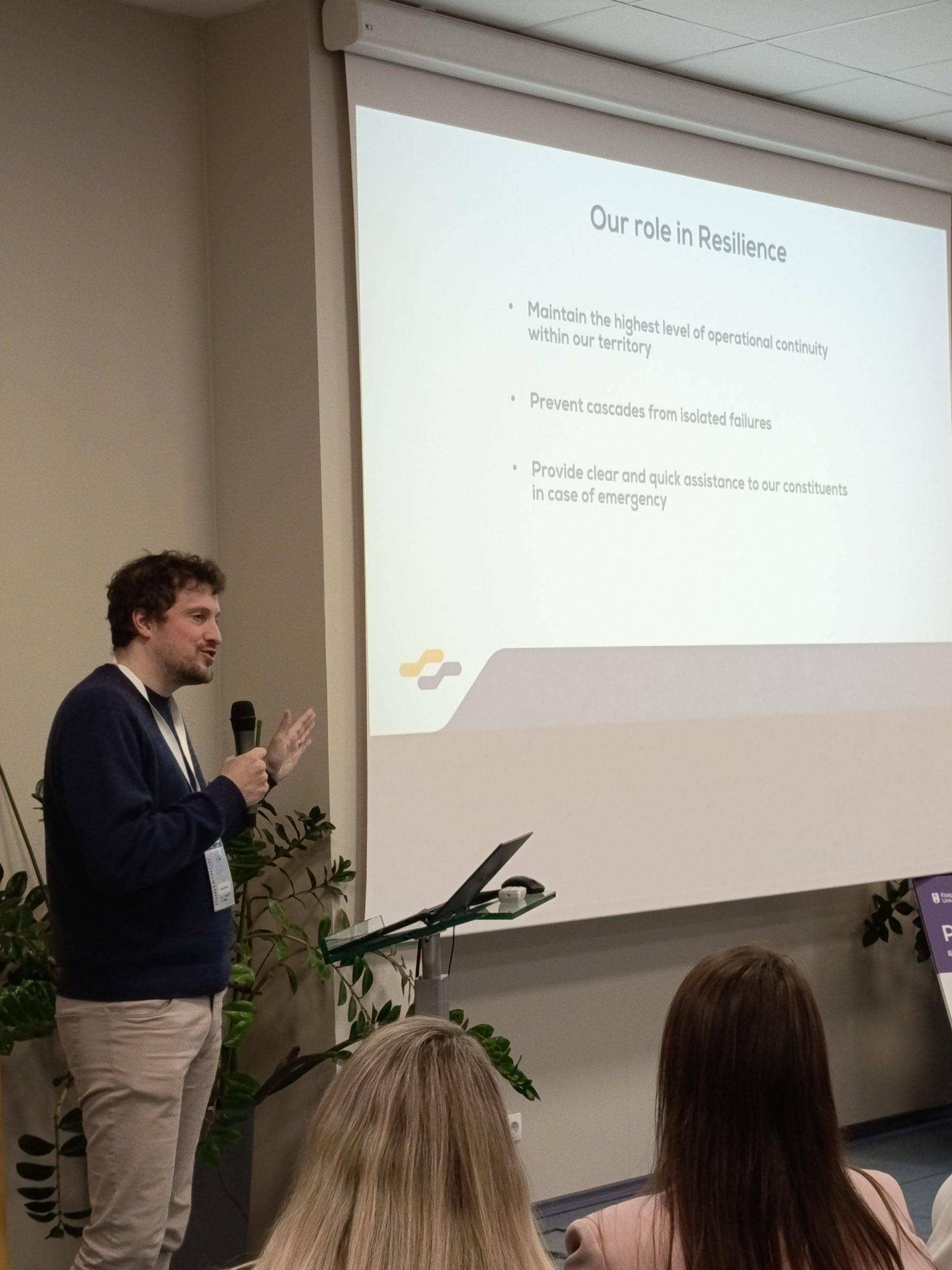
Second-place team FEZ Guard developed a prototype platform for Klaipėda Free Economic Zone to support the management of industrial incidents and emergency situations. The prototype was designed to operate under emergency conditions, including in autonomous mode and using secure communication protocols.
The system is intended to strengthen the resilience of the industrial park and help ensure business continuity for companies operating within the zone.
Third-place winners CFDP tackled the Port of Klaipeda challenge related to the use of green hydrogen and the development of demand across its value chain. The team proposed a concept involving a hydrogen-powered shunting locomotive and hydrogen trucks as one possible way to create real demand for green hydrogen in the transport sector.
No ready-made answers at a hackathon
First-place winners KU.exe selected the La Rochelle challenge because of its relevance to the Port of Klaipeda and the opportunity to approach the problem from an engineering perspective.
“It is fun and definitely worth trying – a hackathon requires a completely different way of thinking. During lectures, you often solve a problem where the answer is already known. Here, there is no known answer. If you find something others have not thought of yet, it can become genuinely valuable,” says KU.exe team member Saulė.
According to her, the mentors’ greatest contribution over the weekend was helping the team refine its idea step by step – from the direction of the proposed solution to the way it was presented. Particularly valuable were insights from mentors who encounter the challenges being addressed in their everyday work.
The team believes that the solution proposed for the Port of La Rochelle could be developed further, although the next steps would require research, simulations and cooperation with the port itself.
Creative solutions can surprise challenge owners too
Business and port representatives who presented challenges at PORTATHON see hackathons as more than just a way to generate new ideas within a short period of time.
“We take part in events like this because, first of all, they create dialogue between the city, business and academic institutions. They are a form of partnership between communities and organisations. There is also a practical element – we want to find solutions. Very creative people come here, and sometimes we receive a completely different solution from the one we expected,” says Virginija Ketlerienė, Commercial Project Manager at the Port of Klaipeda.
According to her, events like PORTATHON also help attract researchers, innovators, talent and young professionals to Klaipeda.
Karlas Impinnisi, Innovation Project Manager at Klaipėda Free Economic Zone, also sees the value of hackathons in the working habits and mindset they help develop among young people.
“Hackathons are worth taking part in because this community produces talent that will have to lead not only us, but Lithuania as a whole, into the future. It is therefore important to have a place where people can practise and get used to the principle: there is a problem – we sit down and solve it,” says K. Impinnisi.
48 hours to test and refine ideas
Throughout the weekend, the teams worked with an international group of mentors who helped participants test their ideas, identify weaknesses and prepare for the final pitches. Mentors highlighted the teams’ energy and motivation, as well as their improved public-speaking skills.
The teams’ progress was also followed by representatives of the business and investment community. PORTATHON was visited by Viktorija Trimbel, CEO of Coinvest Capital, who met the teams and learned more about their developing solutions during the interim presentations.
PORTATHON 2026 was held under the patronage of Minister of the Economy and Innovation Edvinas Grikšas.
The event was organised by Klaipeda Science and Technology Park together with Klaipeda University through EU-CONEXUS ENABLES.
The organisers of PORTATHON 2026 thank the event’s sponsors and partners whose support contributed to the success of the international hackathon: Klaipėda Free Economic Zone, Klaipeda State Seaport Authority, UAB Vėjų spektras, Octohide VPN, Lithuanian Maritime Cluster, DEEP Ecosystems and Schneider Electric.
PORTATHON will return to Klaipeda in 2027.
The full photo gallery is on our Facebook page:
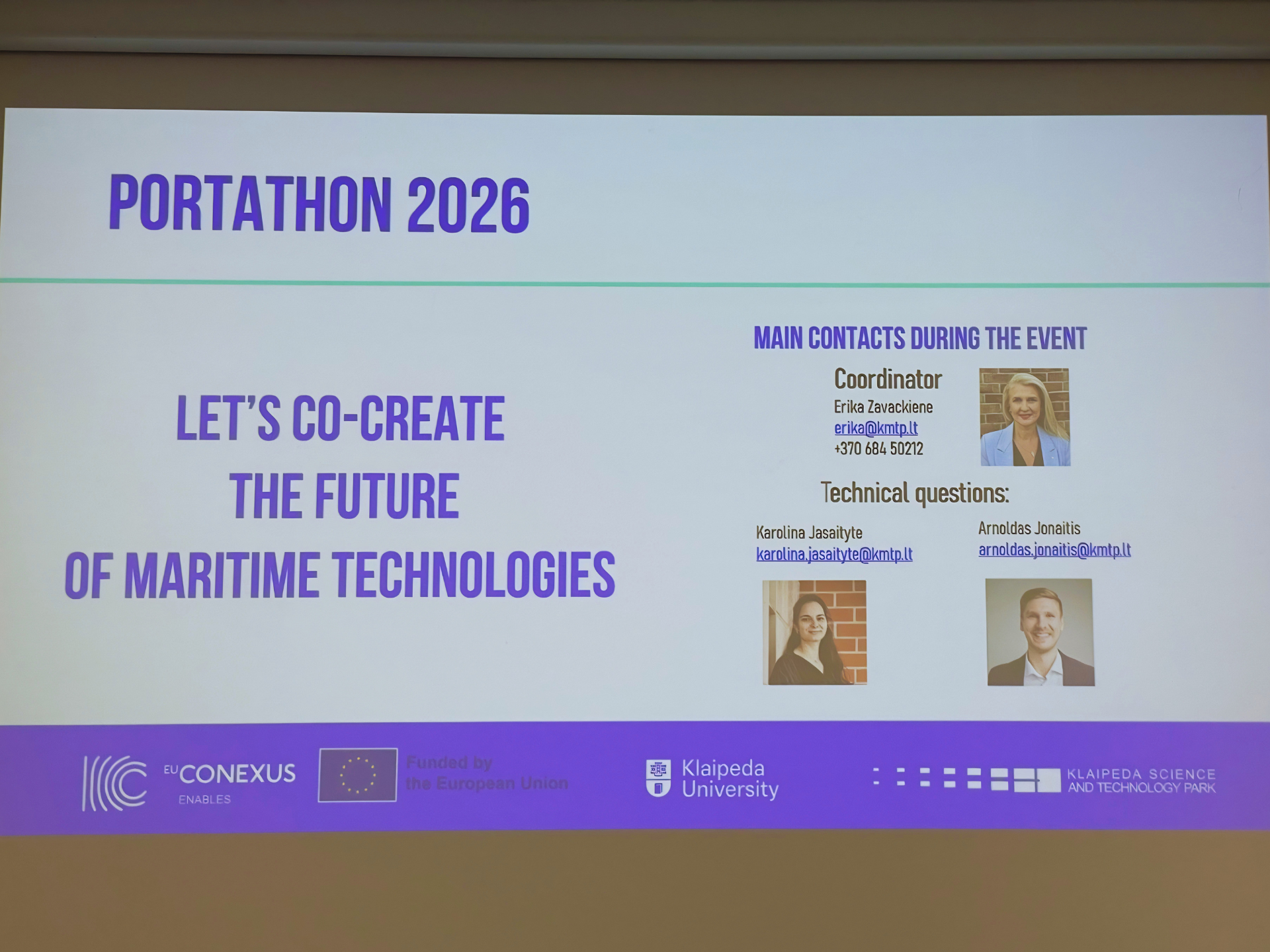
On 25 September, the international hackathon PORTATHON 2026 kicks off in Klaipeda. This year, 120 participants have registered for the 48-hour event, representing a geography that extends far beyond Lithuania. PORTATHON will welcome participants from Serbia and Montenegro, Azerbaijan, Denmark, France, Greece, Romania, Spain, Ireland, Germany, Croatia, Ghana, Lithuania and other countries. It is clear that the port and industry challenges being addressed in Klaipeda are relevant to people working and creating in very different regions of the world.
Over the weekend, participants will form teams and work on four challenges presented by representatives of ports and industry. This year, the focus will be on the use of green hydrogen in freight transport routes, safer city-port interaction, data-driven solutions for more sustainable dredging, and an AI-based industrial resilience and emergency coordination platform.
The teams will be supported by a large group of international mentors, with representatives from ports, technology, energy, industry, business and academia sharing their experience. Within a very limited amount of time, their task will be to help teams test their assumptions, identify the weaker points in their ideas, and understand which proposals have the potential to work not only in a hackathon setting, but also in real-world environments.
“Hackathons are worth taking part in because this community later produces talents who will have to lead us forward in the future – not only us, but Lithuania as a whole. That is why it is important to have a place where they can practise and get used to the idea that there is a problem – we sit down and solve it,” says Karlas Impinnisi, Innovation Project Manager at Klaipėda Free Economic Zone.
Virginija Ketlerienė, Manager of Commercial Projects at Klaipeda Port says: “We take part in events like this because, first and foremost, they provide an opportunity to engage with the city, businesses and scientific institutions. Between communities and organisations, this is a certain form of partnership. On the other hand, we also want to attract scientists, innovators, talents and young professionals to the city. There is also a practical aspect – we want to find certain solutions, because very creative people come here and sometimes we receive a different solution from the one we expected.”
On Friday evening, the teams will begin working and take part in their first consultations with mentors. On Saturday, they will present their interim results and receive feedback from experts, while Sunday will bring the final pitches, revealing how the initial ideas have evolved over 48 hours and what solutions the teams propose for the four PORTATHON challenges.
PORTATHON 2026 is jointly organised by Klaipėdos mokslo ir technologijų parkas and Klaipėdos universitetas with EU-CONEXUS. The event is held under the patronage of the Minister of the Economy and Innovation of the Republic of Lithuania, Edvinas Grikšas.
This year, the hackathon is also supported by Klaipėdos valstybinio jūrų uosto direkcija, Klaipėdos laisvoji ekonominė zona, Schneider Electric, Vėjų spektras, Octohide VPN, Lietuvos jūrinis klasteris and other organisations, whose support and involvement make it possible to turn the marathon of ideas into a space for working on current port and industry challenges.
We’ve also uploaded the photos to our Facebook page: Day 1, Day 2.
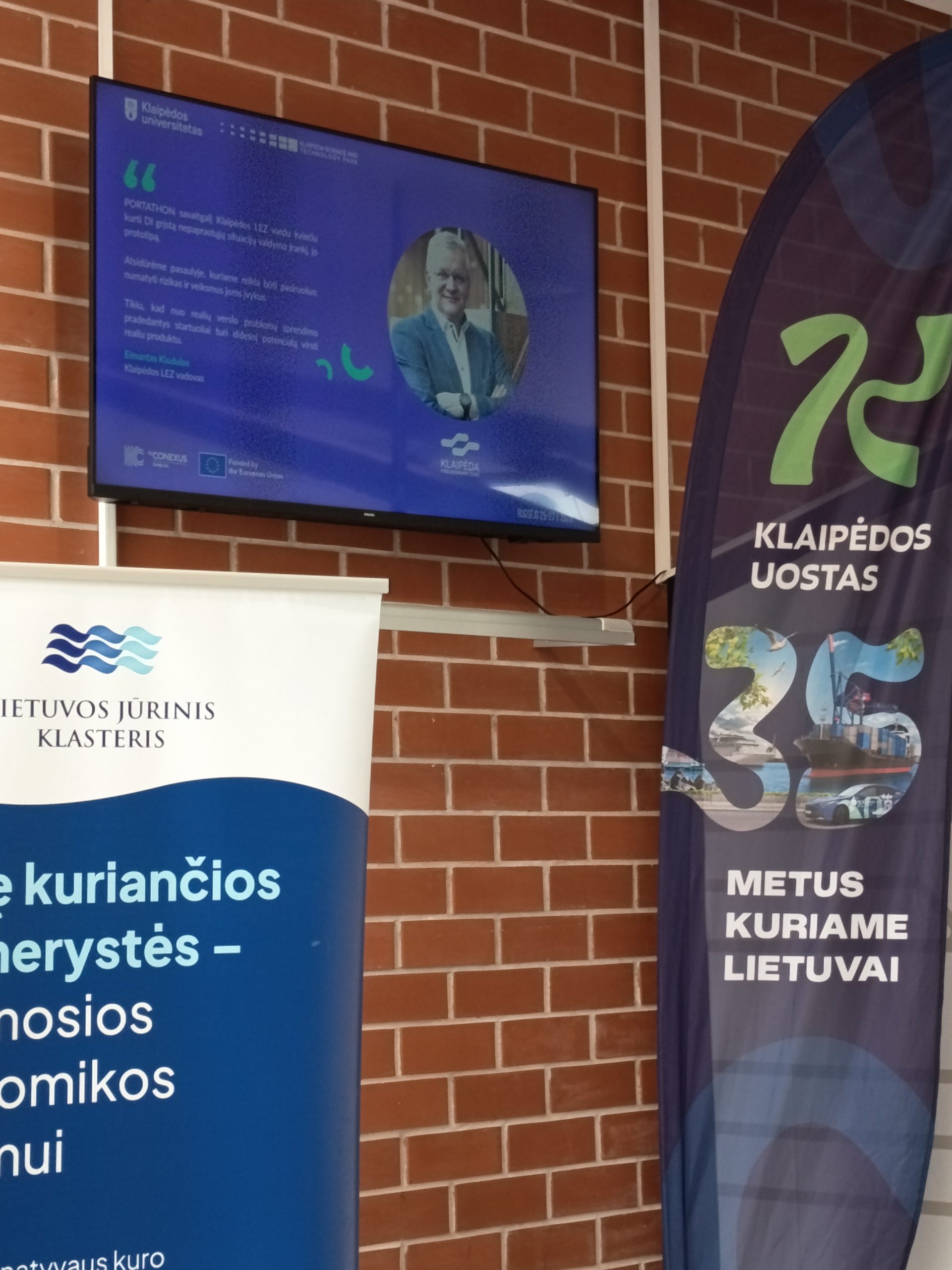
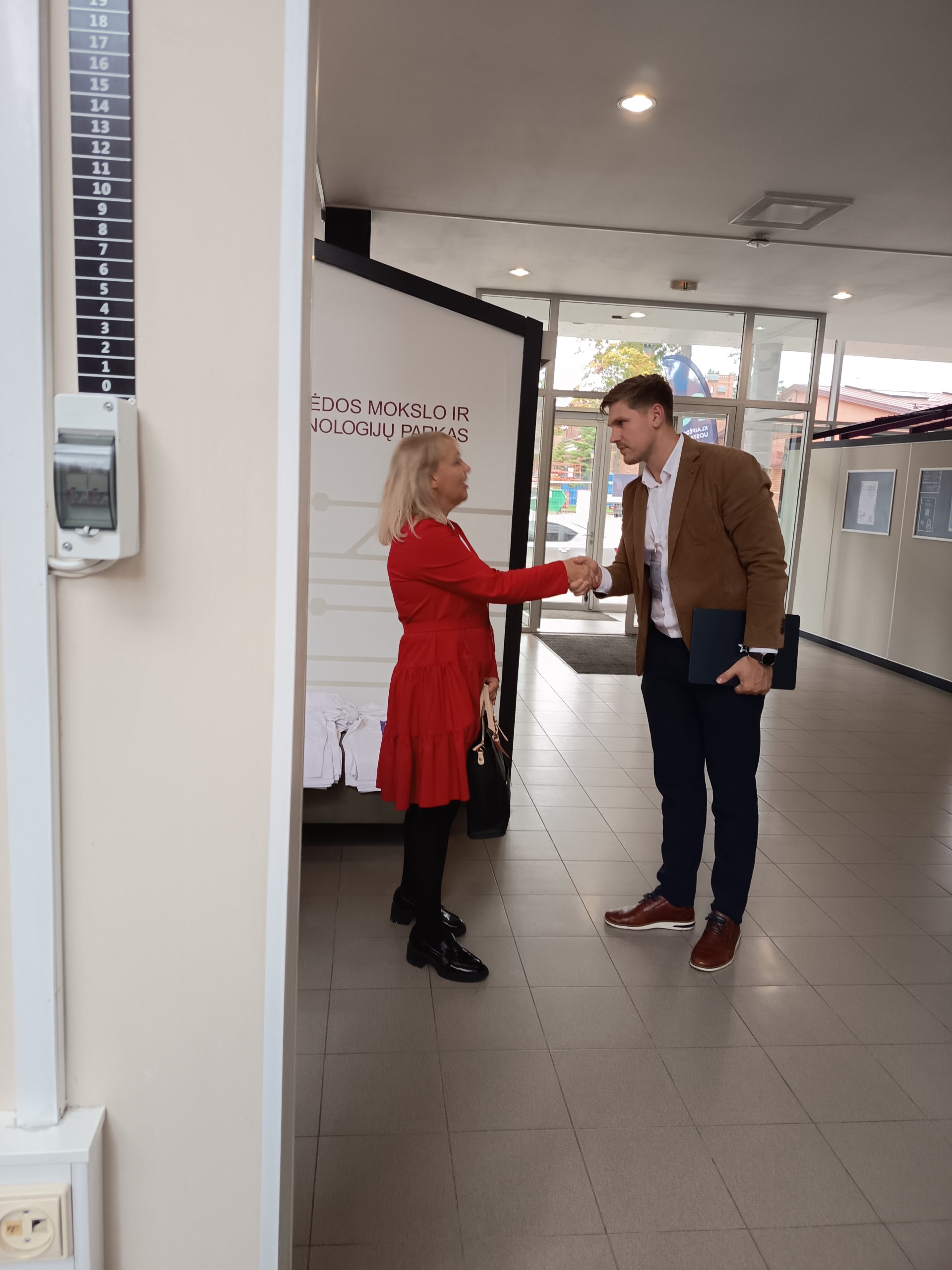
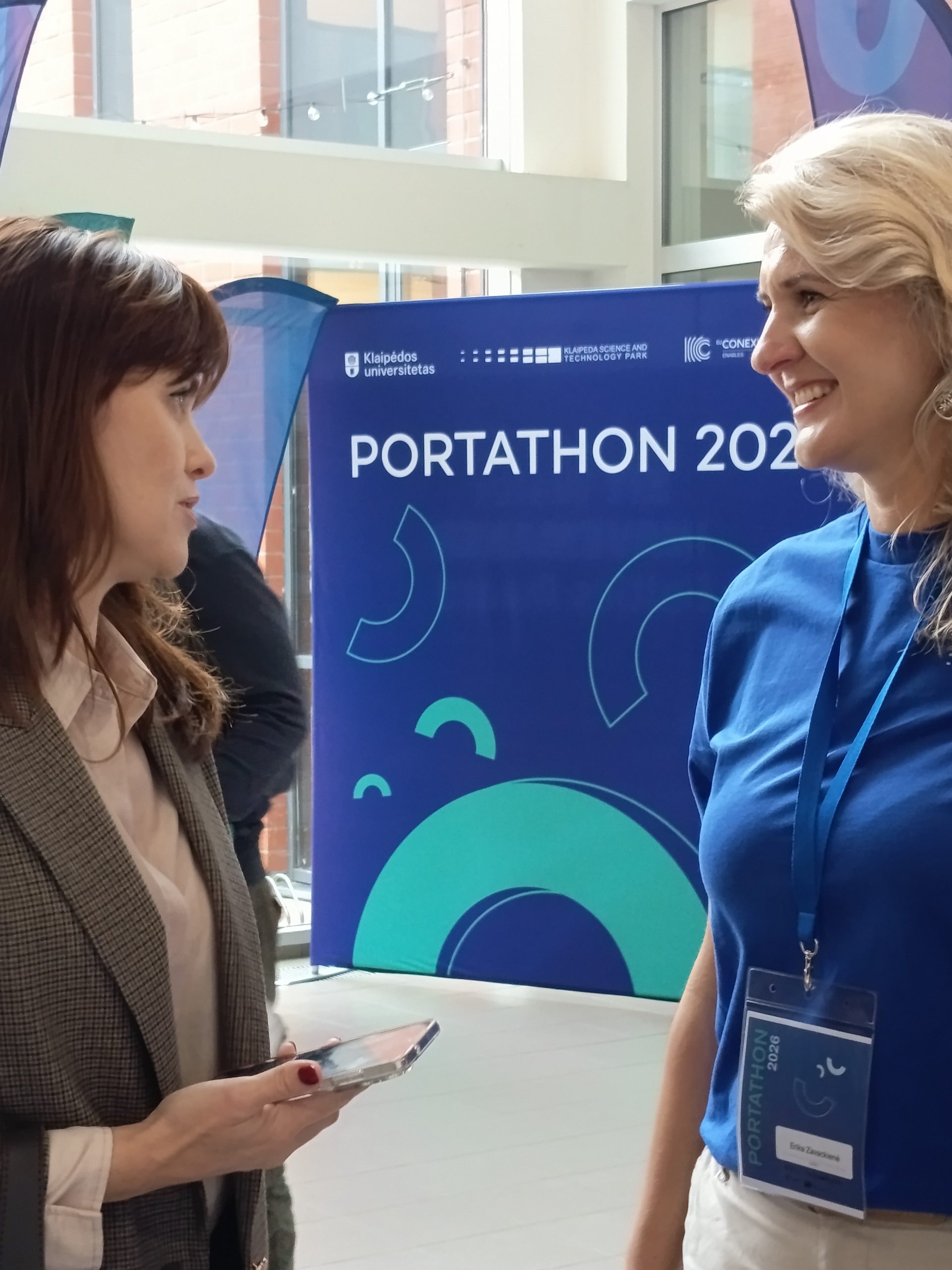
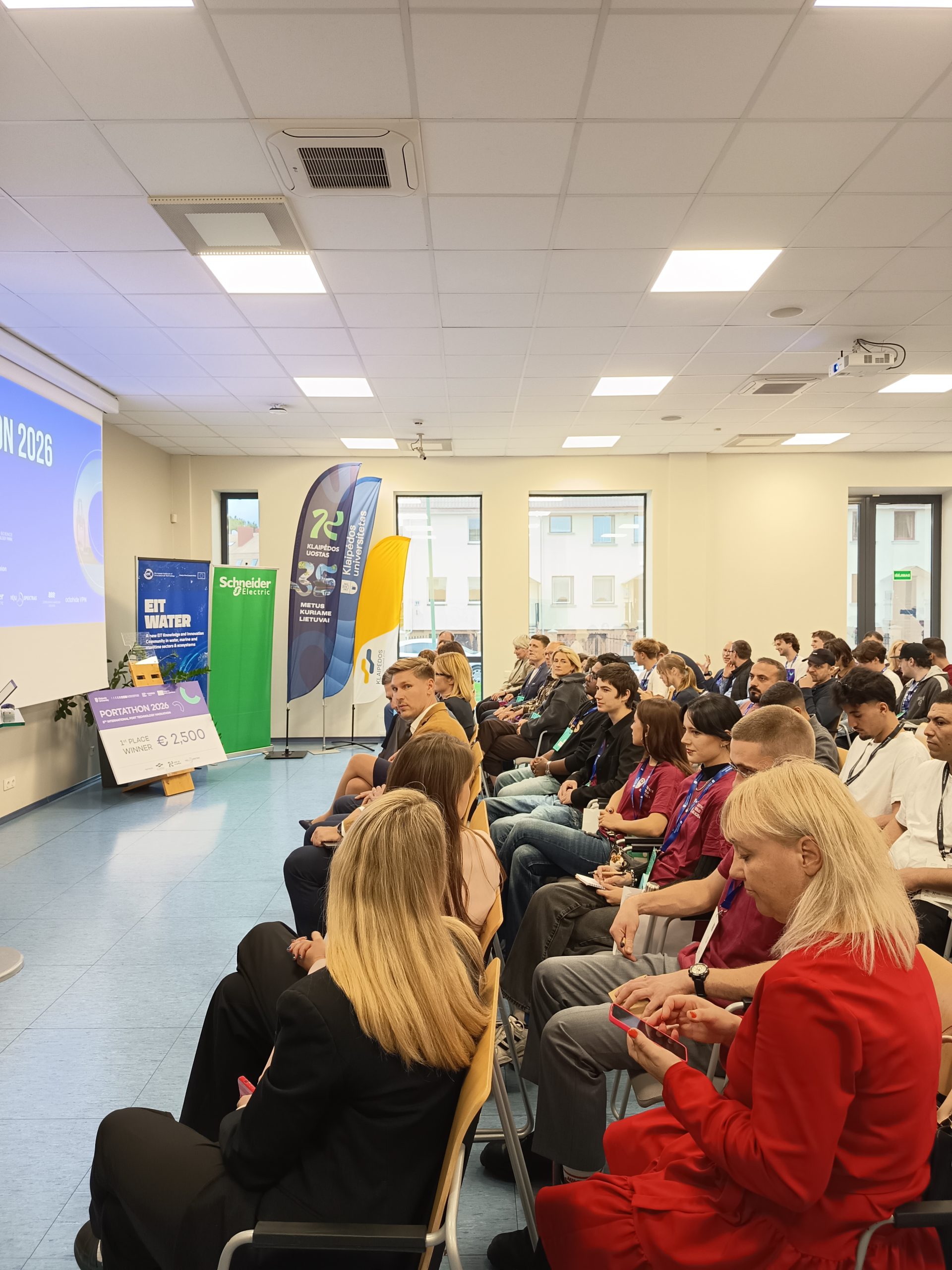
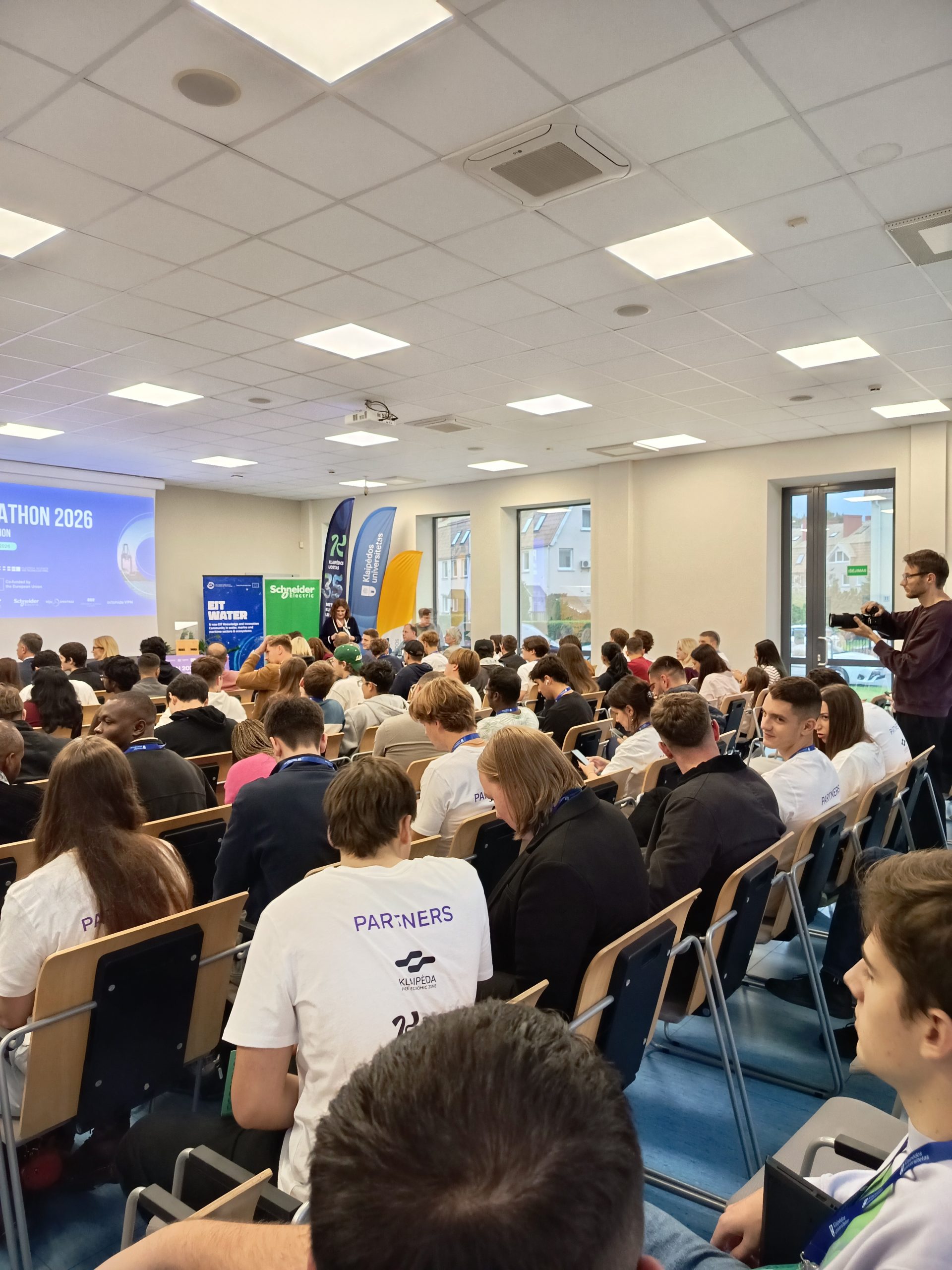
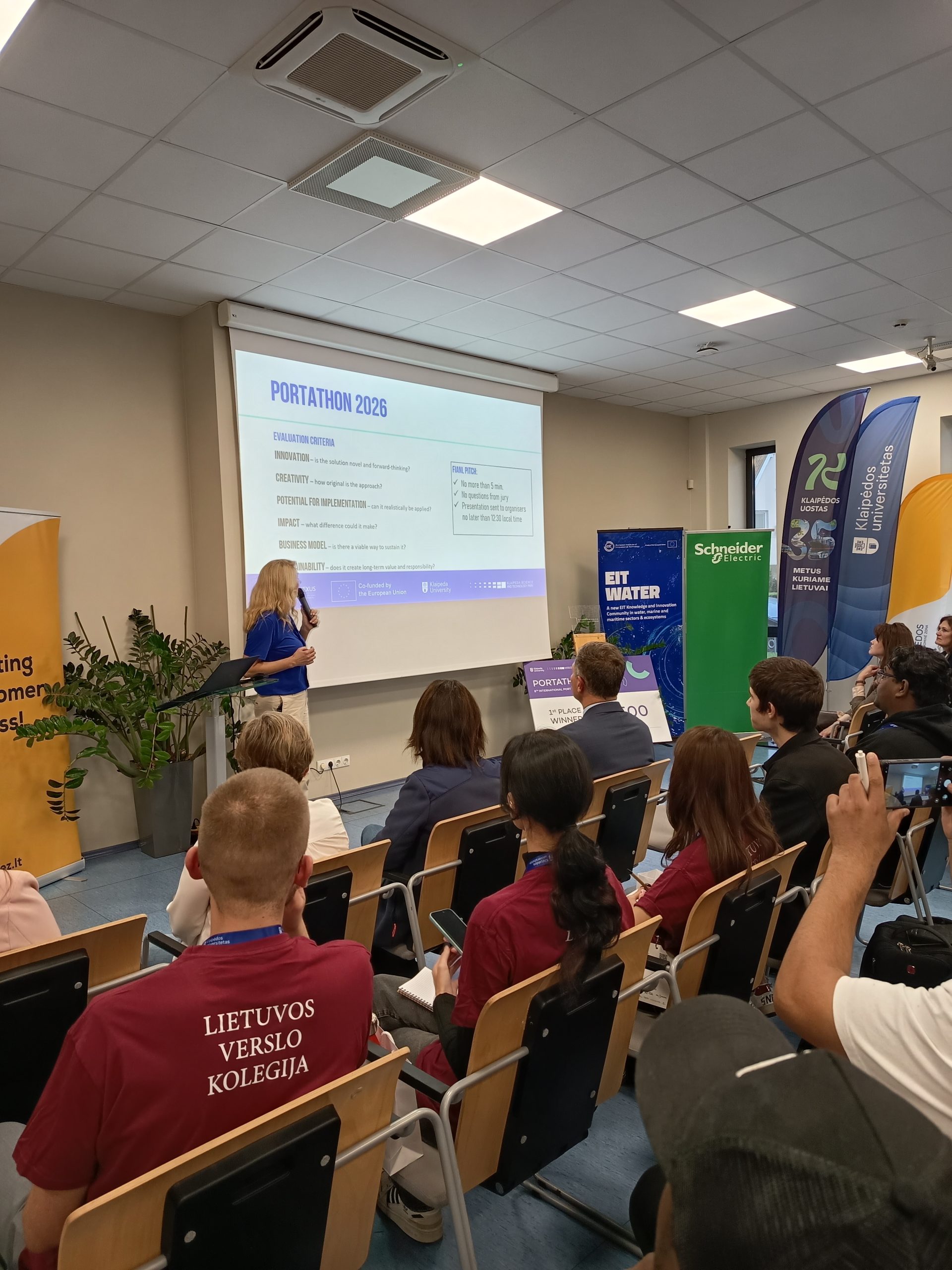

A modern port creates value far beyond the waterfront. It strengthens trade, supports business growth and contributes to the wider economy. Its future depends on people who are ready to test new technologies and turn promising ideas into practical solutions.
This September, PORTATHON will bring together young talent, researchers, experienced professionals and companies for 48 hours of focused work on pressing maritime challenges.
The Minister’s patronage highlights the importance of supporting ideas that can begin in Klaipeda and grow into solutions for Lithuania and international markets.
📍 Klaipeda, Lithuania
📅 25–27 September 2026
Registration links:
For participants:
https://forms.gle/VtofKAgtB2MxUXBb6
For mentors:
https://forms.gle/t83ZCNrztayFuzt36
Challenge registration:
https://forms.gle/neLW3CryzfSbpXFR8
More information:
PORTATHON
The event is organised by Klaipeda Science and Technology Park and Klaipeda University.

Port competitiveness has traditionally been measured by scale, cargo-handling capacity, connectivity and speed. A recent World Economic Forum article argues that other factors will become increasingly important: the ability to adapt to climate change, reduce pressure on the natural environment and prepare for shifts in technology and the skills required across the sector.
As ports evolve into hubs for clean energy, data, automated systems and new industrial processes, their transformation will require more than investment in infrastructure. It will also depend on practical solutions that connect technology, sustainability and safety with the operational needs of ports and maritime businesses.
PORTATHON 2026: 48 Hours to Develop New Solutions

Ideas addressing these challenges will take shape in Klaipeda on 25–27 September during the international port technology hackathon PORTATHON 2026, organized by Klaipeda Science and Technology Park and Klaipeda University.
Hosted by Klaipeda Science and Technology Park, the 48-hour event will bring together students, researchers, technology developers, start-ups and professionals from different fields. Working in multidisciplinary teams, participants will develop solutions to real challenges submitted by the maritime sector.
This year’s challenge areas include cybersecurity and safe navigation, artificial intelligence and unmanned technologies, green and resilient ports, environmental protection and the circular economy.
Over the course of the hackathon, teams will define the problem they want to address, test their ideas, build an initial prototype and receive feedback from experts in maritime business, science and technology. The port of the future will not be shaped by major infrastructure projects alone. It will also depend on focused solutions that improve traffic and cargo flows, reduce energy use, strengthen safety, protect the environment and make people’s work more efficient.
PORTATHON 2026 will take place at Klaipeda Science and Technology Park on 25–27 September. Participants may register individually or as a team. Participation is free and the working language of the event is English.

Registration for participants and teams: https://forms.gle/Ai5CYKG2ftdBuaCXA
Register as a mentor: https://forms.gle/wwKY26vJGWV1pJ2m8
Share your challenge: https://forms.gle/ebxtJ8inZ4tpptqL9
This article was prepared with reference to the World Economic Forum publication “How ports can look to nature, climate and people for a new competitive edge”.
The international port technology hackathon returns to Klaipėda on 25–27 September, bringing together innovators, researchers and young professionals to tackle challenges from the maritime sector.
For the eighth consecutive year, the international port technology hackathon Portathon will dock in Klaipėda, this time on 25–27 September 2026. The event invites innovators, researchers and young professionals to tackle real-world challenges facing the maritime sector, forming over 20 multidisciplinary teams guided by experienced mentors from industry and academia. Each year Portathon attracts more than 100 participants; this year, organizers aim to bring together the event’s most active and diverse innovation community yet.
Not just a weekend challenge, but a launchpad for new ventures
Portathon is more than an intensive three-day sprint. For many participants, it becomes a turning point in their professional journey.
“We joined Portathon simply to test our abilities and see whether our knowledge could be useful. In just a few days we received incredibly inspiring feedback from highly experienced mentors. That’s when we realized our solution had actual potential and it eventually led to the creation of our startup,” says team leader Gytis Raudonius, who participated in the hackathon a couple of years ago and who today, together with the same team, develops technological solutions for the port industry through their company, PortMI.
Participants work on actual business challenges submitted by companies operating within the port ecosystem. This year’s edition will place particular emphasis on safety, artificial intelligence and sustainability – themes that are increasingly defining the future of modern ports against the backdrop of today’s geopolitical and defense challenges.
Eight editions strong: connecting science, business and the next generation of innovators
Over eight years, Portathon has grown into one of the most significant platforms connecting the maritime innovation ecosystem, bringing together science, business and technology developers from across Lithuania and beyond. Young technology creators, startup founders and professionals from a wide range of disciplines all find their place here.
This year, the organizing team is joined by the Klaipeda University and the European University Alliance EU-CONEXUS, further deepening ties with the emerging talent community and expanding the event’s international academic reach.
Industry challenges become tomorrow’s technology
“Companies gain something that is often hard to achieve within daily operations: a fresh perspective on long-standing challenges. Multidisciplinary teams bring forward modern, innovative solutions that can be directly integrated into existing projects,” the organizers note.
Portathon also provides participants with an opportunity to build valuable professional connections, meet experts from the maritime sector and become part of a growing international network shaping the future of ports. The in-person format fosters intensive teamwork, mentored problem-solving and the real-time development and testing of new ideas.
Eight editions in, one thing is clear: the maritime sector is rich in challenges and equally rich in people willing to rise to meet them. Portathon remains committed to strengthening the synergy between innovators, industry and science, turning today’s port challenges into tomorrow’s technologies.
More information and registration: https://kmtp.lt/portathon/portathon-2026/

On September 26–28, Klaipėda Science and Technology Park brought together creators, technology and business representatives for the seventh time for the international maritime innovation marathon PORTATHON 2025. This year, the event once again became not only a creative space, but also a real business tool – a platform where ideas turn into applicable solutions.
Innovation Weekend – Amazing
The hackathon PORTATHON 2025, organized by Klaipėda Science and Technology Park together with the Lithuanian Maritime Cluster, has once again invited participants to a live-only event after a long time, where teams worked for 48 hours non-stop.
This year’s hackathon attracted 120 participants from Lithuania, Sweden, Ukraine, Romania, Georgia, Azerbaijan, Mauritius, South Korea and India, 20 teams competed, 19 of which managed to present final solutions. The event participants were advised by an international team of 22 mentors from the business, science and military industry sectors.
This year’s event required novelty and unusual technological searches due to the variety of challenges. Innovative solutions were obtained that combine not only engineering, but also aspects of national and international geopolitical security in the maritime and transport sectors. The concept of the event has also changed somewhat: the prize fund has been increased to EUR 5,500, and the four winning teams have been ranked by placing after summing up the competition jury scores.
Technological solutions – from cybersecurity to sustainable mobility
The challenges for the hackathon organized by KSTP were, as usual, provided by the event partners: Klaipėda State Seaport Authority, international green energy company Ignitis Renewables, AB Western Shipyard BLRT Grupp, Klaipėda FEZ, and Hamburg and Blekinge Universities of Technology.
It is gratifying that all the challenges raised at the hackathon received solutions. Among the favorites are as many as three of them: the most relevant ones received four solutions each – both challenges submitted by Klaipėda State Seaport Authority, related to GPS interference in navigation and smart ticket sales. The green energy company Ignitis Renewable, formulated on the topic of safety and logistics digitalization of offshore wind farms, also had a lot to choose from – innovative technological solutions were presented.
For the first time in the history of the event, the port’s theme was diversified by the challenge “FutureFlows” of the Klaipėda Free Economic Zone Company, related to a sustainable environment, employee motivation, and transport flow management.
Inspiring victories
The first place went to the team “SHIKAKU”, which created an artificial intelligence-driven defense system against GPS spoofing attacks. The solution combines multi-source data analysis, radar and AIS signals, and an operator warning system. This is the first technology of its kind adapted to the specifics of port operations.
The technological uniqueness of this system is that for the first time the principles of cybersecurity are applied to maritime navigation. It is also the first anti-spoofing system specifically designed for port operations in narrow approach channels, combining military-grade resilience with practical civilian use.
The second place went to “Young Developers”, who presented an interactive GPS interference map generated in real time from open data sources. The most important technological aspect is live monitoring of the data stream, which allows for immediate detection of anomalies. In addition, the system creates historical maps that help identify recurring interference locations and predict recurring patterns, increasing navigation safety.
“FutureFlows” – a new theme at the port hackathon
The third-place winner is the “PortVision” team from Romania, which proposed “FutureFlow” – a sustainable mobility platform designed to change daily commuting habits in the FEZ community.
The solution combines game principles, artificial intelligence-based ride and route matching, and a multi-tiered employer-sponsored reward system. Employees can easily choose between walking, cycling, public transport or car sharing, and the platform ensures trust and transparency using advanced tracking, safety features and fraud prevention mechanisms.
The developers presented a multimodal model for solving the problem with clear benefits for the employer, where direct CO₂ savings reporting summaries, employment, cost-effectiveness and safety indicators are obtained.
Fourth – Klaipėda University’s young engineers’ team “#KU_Engineers”. The latter took on the challenge set by Blekinge University of Technology – artificial intelligence-based cargo flow forecasting and sustainable supply chain support. At the event, the young engineers presented a solution where, based on historical ship route data, a prototype of a machine learning model was trained, which is able to predict trajectories. An artificial intelligence assistant was also created, which acts as an intermediary between mathematical forecast models and historical data processing functions and a decision maker. Such a solution would facilitate the planning and management of ship routes, potentially reduce congestion of ships entering the port, and accordingly reduce delays in logistics links, and help optimize ship fuel consumption.
Platform – where ideas turn into solutions
It is pleasing to note that in addition to financial motivation, other opportunities open up for participants in the PORTATHON hackathon: the solutions they create are applied in real-world business activities, and meeting mentors and partners often becomes a springboard for creating startups.
PORTATHON is the only such platform in the port city, where innovations meet reality, and ideas turn into solutions that can have an impact in the blue and green policy sectors, the circular economy, contribute to environmental and cybersecurity protection, and strengthen the Lithuanian innovation ecosystem.
PORTATHON – comprehensive solutions for business, a platform for talents
PORTATHON marathon partners are traditionally generators of challenges. This year’s event is no exception in this regard. Since the hackathon takes place in a port city, the usual dominant theme is maritime, but it is gratifying that partners of a different nature are also joining the marathon ranks – partners dealing with renewable energy, security, and sustainability issues.
The consistent participation of business partners shows that the hackathon has real value and benefits created, and its results meet market needs. Such value is seen and felt by long-time partners Klaipėda State Seaport Authority, AB Western Shipyard BLRT Grupp, Hamburg University of Technology and Blekinge University of Technology, who joined the partners this year but have supported the event before – the international green energy company Ignitis renewables and Klaipėda FEZ.
Hackathons today are becoming not only creative experiments, but also part of business strategy. These are intensive events where specialists from various fields create new technological or business solutions that generate real value in a few days.
Such formats act as catalysts for innovation – limited time, a clear goal and team dynamics encourage non-standard creativity and rapid implementation of ideas. For participants, it is an opportunity to reveal talents, gain insights from valuable mentors and expand professional connections, and for business – an excellent critical environment and solution platform, where a specific problem is examined in a complex way, covering various aspects and levels of competence – from a strategic approach to practical implementation.


Seventh Innovation Marathon Portathon 2025: technological solutions for port security and sustainability – a response to international geopolitical and global challenges

Klaipėda is once again becoming a hub for innovation and technological solutions for port cities.
The international hackathon Portathon 2025, which will take place on 26-28 September this year, will bring together talents from Lithuania and abroad to develop technological solutions that respond to the global geopolitical and geo-strategic challenges facing the maritime sector today.
This is the seventh event of this format, which over the years has become an important cradle of innovation not only in Western Lithuania, but also in the entire Baltic Sea region.
Portathon not only promotes Lithuania as a progressive and socially responsible maritime nation, but also helps to implement technological solutions born from the synergy of science, business and creative teams.
The annual event brings together engineering, IT, maritime technology, business and science students, researchers, professionals and all those who are able to turn challenges into real solutions.
The event is a highway to ideas
“Portathon 2025 for the seventh year in a row brings together engineering, IT and other talent, knowledge and creativity here in Klaipėda and across the region. As partners, we actively contribute our challenges and teams, valuing the opportunity to develop technological solutions, expand competences and strengthen ties with the innovation ecosystem in Lithuania and beyond. This year’s focus areas – from cybersecurity and AI to green ports and the circular economy – reflect our Group’s core activities and the key issues shaping today’s maritime industry. I invite you to find the answers with Portathon and use this platform as a fast track to turn your ideas into reality. “- encourages Arnoldas Šileika, CEO of Western Shipyard Group.
Challenges drive creativity
This year’s Portathon – challenges are based on the most relevant maritime and geopolitical trends and their solutions will be relevant for every strategic port. Cybersecurity, secure navigation solutions, artificial intelligence, unmanned technologies, the circular economy, biodiversity conservation and mitigating the impact of climate change in ports are all in focus.
“It is often said that a port must be fast and safe, but today that is no longer enough. We need to be both sustainable and able to change faster than the world around us. That’s why Portathon is more than an event for us – it’s a place where solutions are born that can change the entire maritime sector. It’s where we see what we can be tomorrow if we dare to think bigger today,” says Algis Latakas, CEO of Klaipėda State Seaport Authority.
Portathon 2025 will take place live on the last weekend of the year at Klaipėda Science and Technology Park. Klaipėda State Seaport Authority, Western Shipyard Group, and other port ecosystem players from Lithuania and the Baltic Sea region are already preparing challenges for the event participants.
“It is gratifying that the event has not lost its relevance and interest for a number of years, and its results not only become a springboard for start-ups, but also a network of new business partnerships, and a centre of know-how technologies for ports and maritime business. The trust of our partners – their attention, support and commitment to putting our solutions into practice – also creates great value. The Hackathon Portathon is unique in that it is not a game, but a platform where solutions with potential actually become a reality”, says Eriks Zavackienė, co-creator and coordinator of the event and project manager at KSTP.
Opening of registration announced
Registration is open to individual participants, groups, mentors and challenge providers.
Teams will consist of 3-5 people. There is no age limit, IT and engineering students, professionals, start-ups and enthusiasts, business management professionals, researchers, port and maritime businesses are welcome to participate. The results of the hackathon teams will be judged by a jury of professionals in their respective fields, and the finalists will share a prize fund of €4,000, with the opportunity to further develop and implement their projects in real life.
Additional information
Participant registration: https://bit.ly/Portathon2025_PARTICIPANTregistration
Mentor registration: https://bit.ly/Portathon2025_MENTORSregistration
Challenge registration: https://bit.ly/Portathon2025_CHALLENGEregistration
More about Portathon: https://kmtp.lt/portathon/


EU-CONEXUS has engaged in a partnership with the international port technology hackathon Portathon 2024. Empowering collaboration between science, maritime businesses and port authorities, and fostering an innovation ecosystem, Portathon offers new opportunities to apply a scientific approach towards smart urban coastal sustainability.
All EU-CONEXUS students and academic communities are invited to get involved in a 48-hour hackathon on 27-29 September in Klaipėda (Lithuania) or via an online platform. During an inspiring weekend, teams will develop innovative technological and digital solutions tackling sustainable ports, port cities and ecosystems, the maritime industry, logistics and energy challenges.
“Last year, our experience at Portathon was emotionally charged, thanks to the enthusiastic foreign students who shared their joy with us. We are delighted to share these feelings and values and hope to inspire any student to participate in this contest. Our young UTCB team presented innovative ideas for the challenges posed, and as a mentor, I had an outstanding experience offering guidance to all the participating teams. The contest was a wonderful opportunity for the team to surpass its limits in difficult situations, and we eagerly look forward to participating again this year, aiming for the prizes,” said PhD Ramona-Oana Flangea of the Technical University of Civil Engineering of Bucharest.
Initiated in Lithuania by the Klaipėda Science and Technology Park in collaboration with the Lithuanian Maritime Cluster and long-term partners, Portathon offers a unique space to establish cooperation with members the of European ports’ ecosystem, set up a base for the young talents‘ future careers. Furthermore, the most successful teams after previous Portathons were invited by port companies to finalise their ideas, create prototypes, or join the companies.
Participants are guided by an international team of mentors, joined each year by over 20 experts in a wide range of fields. One of them is Associate Professor Audrius Senulis, the Head of the Engineering Department at the Faculty of Marine Technologies and Natural Sciences of Klaipėda University, researcher at the Marine Research Institute of KU, who has mentored at every single Portathon.
“In the beginning, the hackathon was more about industry solutions but, through the years, it transformed and is now dedicated to creating solutions for port challenges. Also, it has evolved from a local event to an international one, attracting participants from all over the world. The global pandemic also had an impact – Portathon became a hybrid event, as more participants from abroad had a chance to get involved online. Though in my opinion, the true Portathon spirit emerges in the live event, when you see other teams, generate ideas, make contacts, sleep, eat, meet new friends, and propose the solutions,” Assoc. Prof. Senulis shared his extensive experience at numerous Portathons.
He added, that the topics also expanded, starting from more technical, and as the world and technologies constantly evolve, the challenges strive towards IT solutions, cybersecurity, and AI applications.
Every year, Portathon attracts around 100 innovators from the Baltic Sea countries, other European countries and even other continents. The organisers encourage both teams and individuals to register. According to them, the most successful teams are those formed of representatives with backgrounds in different sectors.
This year, Portathon is co-funded by the international Blue Supply Chains project and will seek to respond to the challenges of creating and developing sustainable supply chains in the Baltic Sea Region.
REGISTRATION
Participants & teams: https://bit.ly/Portathon2024Participants
Mentors: https://bit.ly/Portathon2024Mentors

Co-funded by the Interreg Baltic Sea Region Programme, the Blue Supply Chains project is helping to drive the transition towards a green and resilient Baltic Sea Region.
This article was prepared with the financial support of the Interreg Baltic Sea Region. Klaipėda Science and Technology Park is responsible for the content of the article. Under no circumstances can it be taken to reflect the opinion of the Programme.

International port technology hackathon PORTATHON is coming – on 27-29 September Klaipėda once again will become the birthplace of innovative technological and digital solutions for ports. Experts in digitalisation, cybersecurity, logistics, port technology, university communities and start-ups are invited to join – participate, mentor and submit challenges.
Meet-up of experts and young talents
Spreading the sails towards port innovations, Portathon is initiated by the Klaipėda Science and Technology Park in collaboration with the Lithuanian Maritime Cluster and long-term partners. This year, participants will generate solutions for the challenges of sustainable ports, port cities and ecosystems, the maritime industry, logistics and energy.
“We invite young talents, scientists and business experts from various fields to “dock” in Klaipėda, share their knowledge and experience, and embark on a mission of creating modern ports. For start-ups, this hackathon is a great opportunity to meet potential clients and establish contacts with maritime businesses”, says Erika Zavackienė, Project Manager of Klaipėda Science and Technology Park and coordinator of the hackathon.
Every year, Portathon attracts around 100 innovators from the Baltic Sea countries, other European countries and even other continents. The organisers encourage both teams and individuals to register. According to them, the most successful teams are those formed of representatives with background in different sectors.
Starting point for marine start-ups
Members of the port ecosystem and scientific institutions are welcome to submit challenges, which will be solved during a 48-hour hackathon. Participants will be mentored and guided by an international team of mentors, joined each year by over 20 experts in a wide range of fields.
“For the cluster, the value of this hackathon lies in discovering young talents, establishing cooperation with scientists, nurturing a new generation of professionals, and fostering the creation of start-ups which develop modern solutions for ports,” says Andrius Sutnikas, Coordinator of the Lithuanian Maritime Cluster.
Previously, the most successful teams were invited by port companies to further develop their ideas, create prototypes, and join their teams.
This year, Portathon is co-funded by the international Blue Supply Chains project and will seek to respond to the challenges of creating and developing sustainable supply chains in the Baltic Sea Region.
REGISTRATION
Participants & teams: https://bit.ly/Portathon2024Participants
Mentors: https://bit.ly/Portathon2024Mentors
Challenges: https://bit.ly/Portathon2024Challenges
Co-funded by the Interreg Baltic Sea Region Programme, the Blue Supply Chains project is helping to drive the transition towards a green and resilient Baltic Sea Region.
This article was prepared with the financial support of the Interreg Baltic Sea Region. Klaipėda Science and Technology Park is responsible for the content of the article. Under no circumstances can it be taken to reflect the opinion of the Programme.
Klaipėda, Lithuania, invites to develop advanced solutions for modern ports of today and the future. On 20-22 September, the Portathon Baltic 2019 hackathon will bring together teams from business organisations, academic institutions, innovation developers and startups from Lithuania and abroad.
The event aims to rally specialists with various competences and technology enthusiasts – with the help of experienced mentors, they will generate ideas and prototypes that could be adapted in developing smart transport ecosystems and in the logistics sector through automation and digitalisation of port terminal facilities and various processes. The teams will have 48 hours to work on their solutions and present them to the jury.
Spotlight on the ‘blue breakthrough’
Organisers are already in the midst of intense preparations. According to the hosts, the event is relevant in several aspects.

‘In representing a city that develops maritime industry and has an ambitious ‘blue breakthrough’ strategy, we find opportunities to implement innovations at the port, thus ensuring even greater competitiveness, to be highly important. The theme of the hackathon will create an opportunity to take a very broad perspective of the transport sector, because a port is not just ships but also railways and road transport. The entire sector is being rapidly transformed by automation and digitalisation, which in turn bring both challenges and new opportunities. Of course, the greatest return will be enjoyed by those who will not simply watch these processes, but also be active developers and enablers of the new solutions,’ said Andrius Sutnikas, Development Manager at Klaipėda Science and Technology Park (KSTP).
The event, which will take place in Klaipėda for the first time, is organised by the KSTP, with the support of the Klaipėda State Seaport Authority, Lithuanian LNG cluster companies, and partners from Poland – the Gdansk-Gdynia-Sopot Metropolitan Area organisation.
The hackathon will take place within the Smart-up BSR project framework. The purpose of this project is to help the countries in the Baltic Sea region to solve issues encountered during the implementation of regional scientific research and innovation policy, sharing the good practice of EU smart specialisation experts, as well as jointly developing concepts for the implementation of smart specialisation. One of the target areas of this project is the idea of a smart city.
The Agency for Science, Innovation and Technology has already included the Portathon Baltic 2019 hackathon into this year’s Innovation Week event calendar.
Prizes and valuable contacts
The format of the hackathon − a marathon of generating ideas and prototypes – has already been tested by IT experts at the KSTP. Last year, the Park organised the 48-hour Industry 4.0 hackathon, during which participants generated innovative solutions for use in the industry. Several foreign students had joined the event as well. Portathon Baltic 2019 will focus on internationality in particular, aiming to expand not only the geography but also the outlook of the participants, encouraging the search for valuable partnerships and providing better opportunities to test various ideas.
The teams offering the most interesting solutions will be awarded valuable prizes. ‘It is also important to note that the results of the hackathon will be instantly noticed by potential investors – companies operating at the port and in this region. The direction of the hackathon and the deliberately-chosen location for this event create the perfect environment for a good idea to become a tangible product or improved service, because, in addition to potential investors, we have and can use the strong scientific base of Klaipėda University,’ noted A. Sutnikas.
Teams can now register
Participation at the event is free of charge and registration has already begun. Companies are encouraged to delegate their representatives, individual startups, experts, engineering and IT students, can also form their own teams to reach a common goal.
At the Klaipėda Science and Technology Park, participants will be provided with everything they need to dive right into the challenges, for as long as it takes, without counting the hours – even all night long if necessary. If needed, teams will be able to complete some of their tasks at the Business Incubator’s 3D modelling base; there they will be provided with AutoCAD and SolidWorks software, as well as a 3D printer.